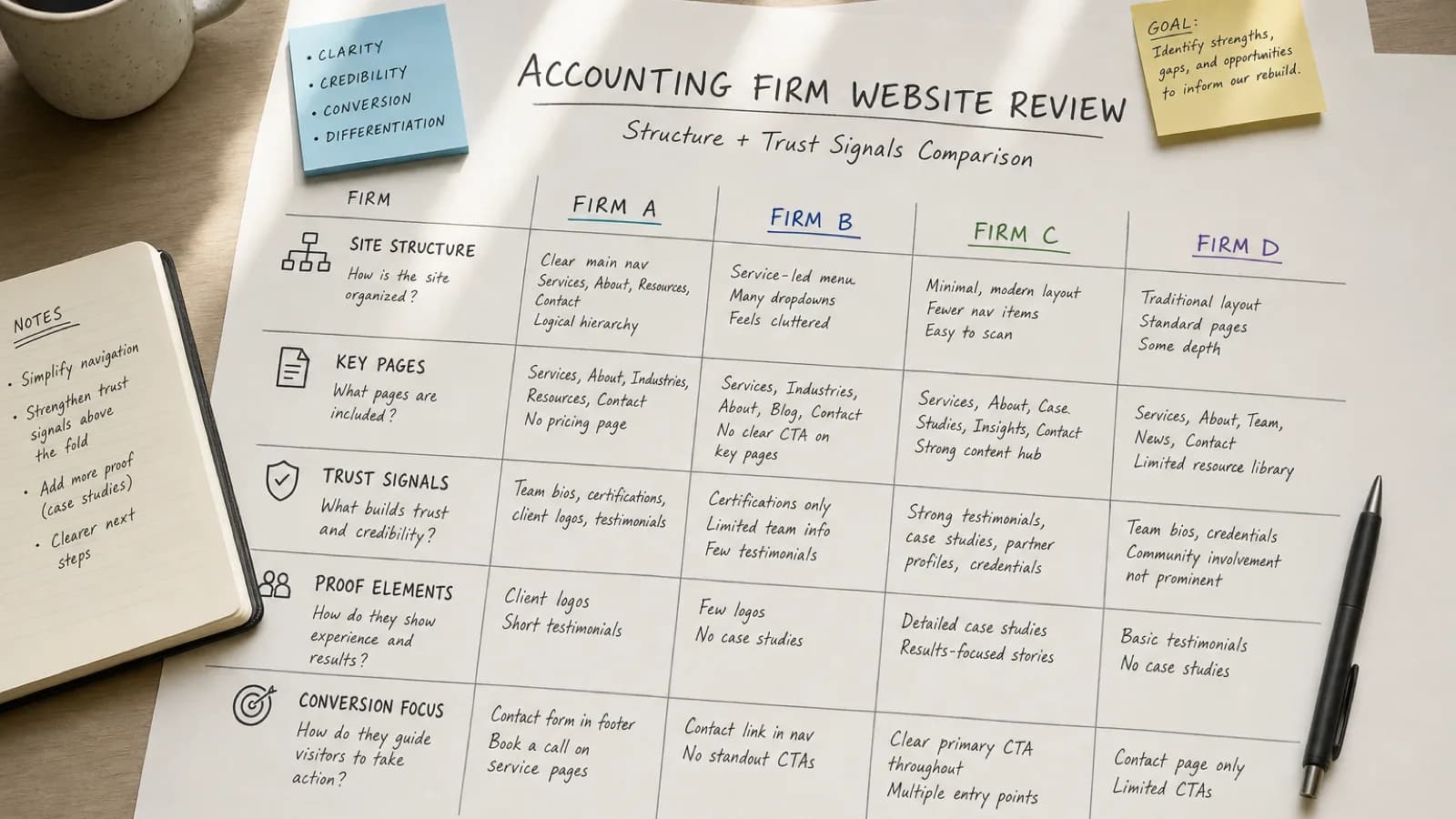
Ads can bring attention. Your website has to earn trust.
Running ads can help an accounting firm get in front of more potential clients. But attention is only the first step.
Before someone schedules a consultation, requests a quote, or sends an inquiry, they usually do one important thing: they check your website.
That visit often happens quietly. No form submission. No phone call. No obvious signal. A prospect clicks, looks around, and decides whether your firm feels credible enough to contact.
If the website feels dated, unclear, slow, or hard to use, the ad spend may still generate traffic — but the site can reduce confidence before the relationship starts.
For accounting firms, trust is not a design detail. It is part of the buying decision.
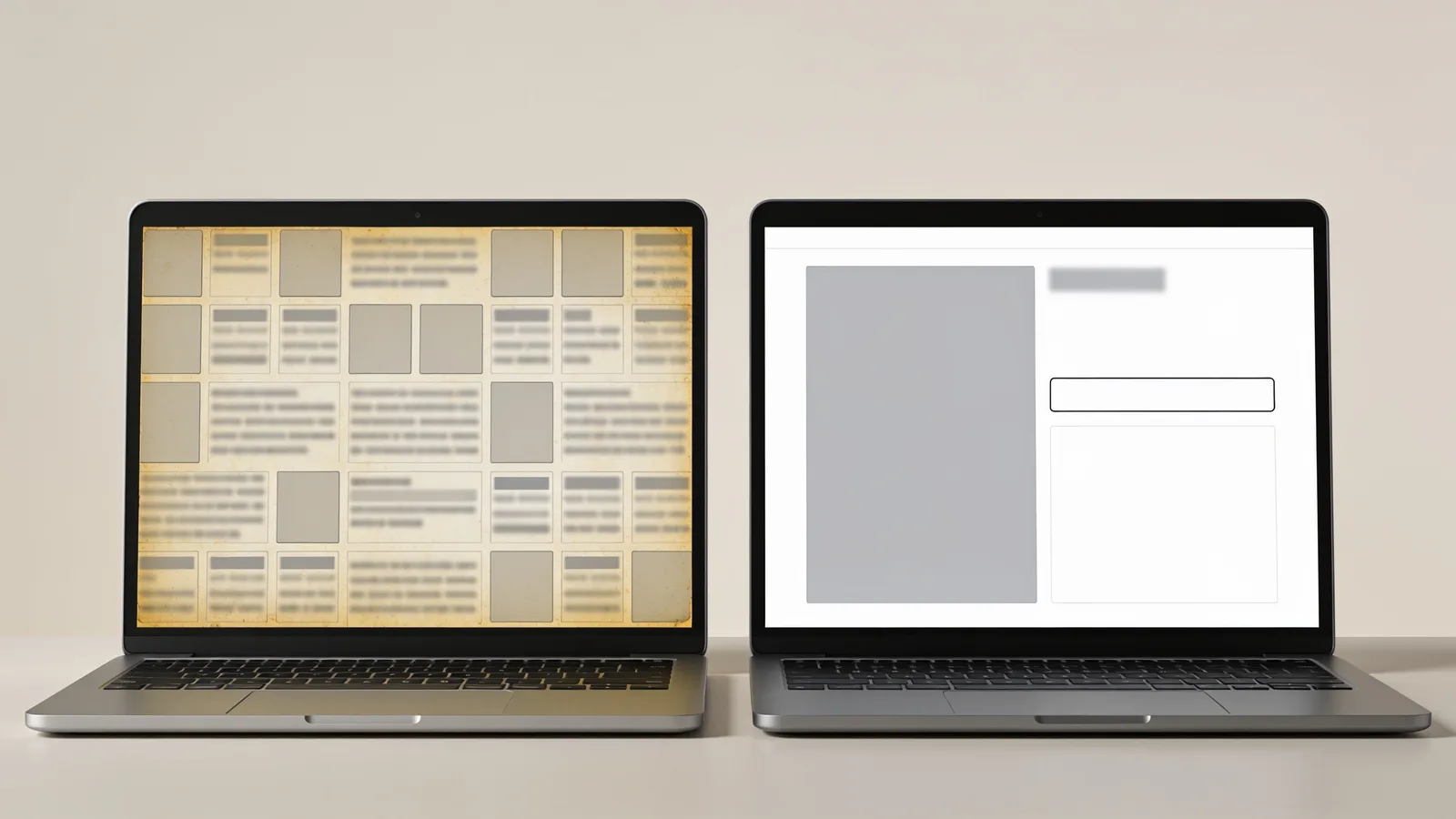
A dated website creates friction before the first conversation
Most prospects are not evaluating an accounting firm the way a designer would. They are not looking for trendy visuals or complicated effects.
They are asking simpler questions:
- Does this firm look current?
- Do they work with people or businesses like me?
- Can I understand what they do quickly?
- Do they seem organized and professional?
- Is it easy to take the next step?
A dated website can make those questions harder to answer.
Old layouts, crowded pages, generic copy, weak mobile experiences, and unclear calls to action can all create doubt. Even if the firm is excellent, the website may not communicate that excellence clearly.
That matters because accounting is a trust-based service. Prospects are considering sharing financial information, business goals, tax concerns, or sensitive records. If the website feels neglected, they may wonder whether the client experience will feel the same.
Your website is part of the ad funnel
Many firms treat ads and websites as separate projects. Ads are seen as marketing. The website is seen as a digital brochure.
In reality, the website is where much of the conversion decision happens.
An ad may introduce the firm, but the website has to support the next step. It needs to explain the offer, reinforce credibility, answer practical questions, and make it easy to book.
If the site does not do that, ads can become more expensive than they need to be. More clicks may not lead to better inquiries. More traffic may only expose more people to a weak first impression.
Before increasing visibility, it is worth making sure the destination is ready.
Modern does not mean flashy
A modern accounting firm website should feel clear, current, and trustworthy. It does not need to be loud.
For many firms, the strongest design direction is simple and polished:
- Clean page structure
- Clear service positioning
- Strong typography
- Professional imagery or visual systems
- Mobile-friendly layouts
- Direct calls to action
- Proof points that support trust
- Copy that explains who the firm helps and how
Modern design is not about chasing trends. It is about reducing uncertainty.
When a prospect lands on the site, they should quickly understand what the firm does, who it serves, and why it feels credible.
Trust signals should be visible, not buried
Accounting firms often have strong credibility signals, but they are not always presented clearly online.
A modern website can surface the details prospects look for before booking:
- Clear firm positioning
- Specific services and client types
- Professional bios or team information
- Process explanations
- Testimonials or client language, when available and permitted
- Helpful educational content
- Secure and professional contact pathways
- Consistent branding across pages
These details help a prospect feel oriented. They show that the firm is established, intentional, and prepared to serve.
The goal is not to overwhelm the visitor with every credential or detail. The goal is to make confidence easier.
Better websites can improve the quality of inquiries
A clear website does more than help prospects trust the firm. It can also help the firm attract better-fit inquiries.
When services, audience, process, and next steps are clearly explained, visitors can self-select before reaching out. That means fewer vague inquiries and more conversations with prospects who understand what the firm offers.
This is especially important before running ads. Paid traffic can bring a wider range of visitors. Without clear messaging, the firm may receive unqualified leads — or no meaningful inquiries at all.
A stronger website helps turn attention into better conversations.
What to review before running ads
Before investing in paid campaigns, accounting firms should review the website through the eyes of a first-time visitor.
Start with these questions:
- Is the site visually current and professional?
- Can someone understand the firm's services within a few seconds?
- Does the site explain who the firm is best suited for?
- Is the mobile experience easy to navigate?
- Are calls to action clear and repeated in the right places?
- Are trust signals visible before the contact page?
- Does the copy sound specific, helpful, and credible?
- Does the site make booking or inquiry simple?
If the answer to several of these is no, the website should likely be improved before scaling ad spend.

The best time to modernize is before traffic increases
A website redesign or refresh is often treated as something to do later — after marketing starts, after ads are tested, after more leads are needed.
But a website is not just a final destination. It is a filter, a credibility check, and a conversion tool.
For accounting firms, modernizing the website first can create a stronger foundation for every marketing effort that follows.
Ads may help more people find the firm. A strong website helps more of the right people feel ready to take the next step.
Common questions
FAQs about this topic
Should an accounting firm redesign its website before running ads?
If the current website feels dated, unclear, slow, or difficult to use, it is usually worth improving before investing heavily in ads. Ads can drive traffic, but the website still has to build trust and convert visitors.
What makes an accounting firm website feel modern?
A modern accounting firm website is clear, professional, mobile-friendly, easy to navigate, and specific about services, audience, credibility, and next steps.
Can a better website improve ad performance?
A stronger website can support better conversion by reducing friction, clarifying the offer, and helping prospects feel confident enough to inquire or book a call.