Key takeaways
- Visitors scan accounting firm homepages before they decide whether to keep reading.
- The first screen should answer who you help, what you help them with, and what they should do next.
- Specific CTAs reduce hesitation because they explain what clicking actually means.
Most visitors won't give you 10 seconds. Here's how to make sure the ones who do actually stay.
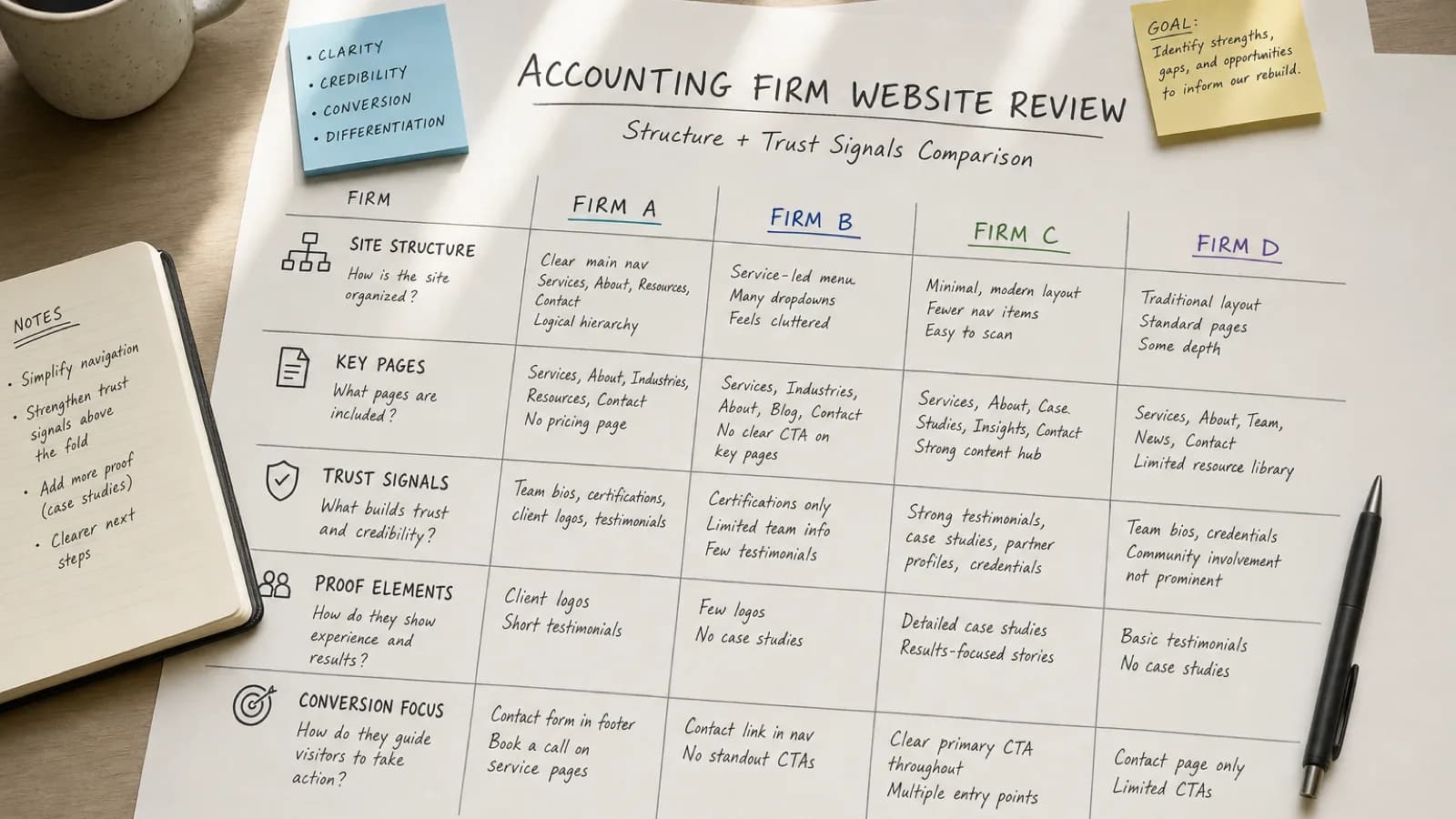
Nobody reads a homepage anymore. They scan it.
A prospect lands on your site, and in the first few seconds they're making a decision — not about whether to hire you, but whether it's even worth reading further. If your homepage doesn't immediately signal "this firm is for people like me," most visitors leave quietly. No inquiry. No follow-up. Just a closed tab.
The 10-second test is simple: pull up your homepage and ask whether a stranger could answer three questions without scrolling or thinking hard.
Question 1: Who do you help?
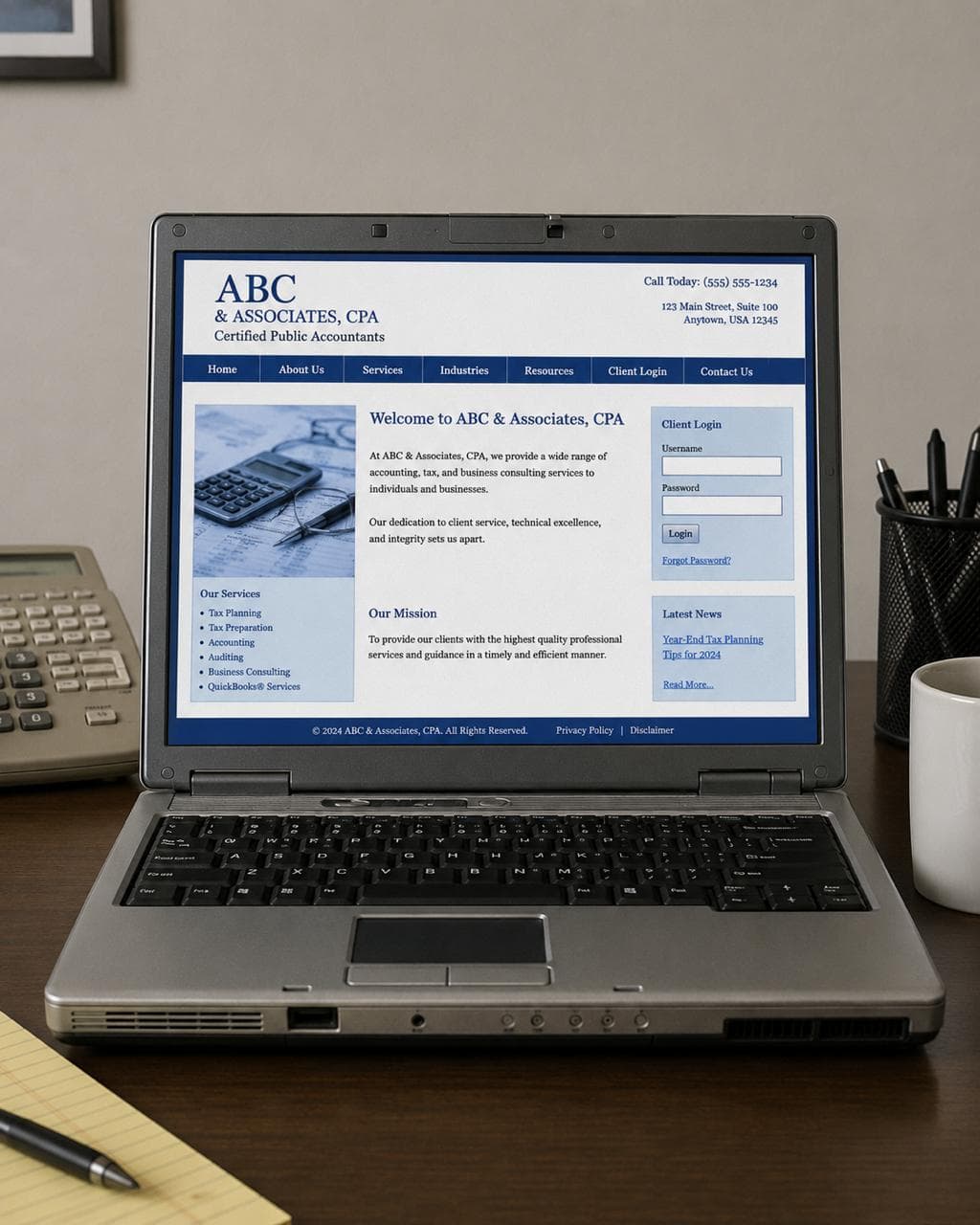
"Individuals and businesses" is technically true for most accounting firms. It's also the phrase that makes visitors feel like they've landed on a generic directory listing.
The firms that convert better tend to be specific. Not restrictive — specific. There's a difference between "we only work with one kind of client" and "we help small business owners who need year-round bookkeeping and tax planning." The second version doesn't exclude anyone who matters. It just makes the right person feel immediately found.
Question 2: What do you help them with?
Service labels — tax preparation, bookkeeping, payroll, advisory — are necessary but not persuasive on their own. They tell a visitor what you do. They don't tell them why it matters.
The gap is outcome. "Tax preparation" is a task. "Reduce surprises before tax season" is a reason to reach out. The best accounting websites do both: name the service and connect it to something the prospect already cares about.
Question 3: What should they do next?
This one seems obvious, but a lot of accounting websites either bury the CTA or make it too vague. "Contact us" tells someone they can reach out. It doesn't tell them what reaching out looks like, what they'd share, or what happens after.
A stronger CTA gives the visitor a clearer picture: "Schedule a 20-minute intro call," "Request a quote for monthly bookkeeping," "Tell us about your business." The more specific the ask, the lower the friction to click.
The practical test
Find someone who doesn't know your firm. Show them your homepage for 10 seconds — not a minute, not long enough to scroll. Close the page and ask:
- Who does this firm help?
- What's the main service or outcome?
- Why would you trust them?
- What would you click next?
If they hesitate or give vague answers, your homepage is asking visitors to do too much work. The fix is almost always in the first screen.
Why this matters
Accounting is a trust-heavy service. Prospects are bringing sensitive documents, real deadlines, and long-term decisions. A homepage that makes them work to understand your firm costs you more than it seems.
Common questions
FAQs about this topic
What is the 10-second test for an accounting website?
It is a simple homepage clarity test. A stranger should be able to understand who the firm helps, what the firm helps with, why the firm seems trustworthy, and what to click next after seeing the first screen for about 10 seconds.
What should an accounting firm homepage say first?
It should quickly state who the firm helps, what outcome or service it provides, and the next step a visitor should take. Specificity is usually more useful than a generic welcome message.
Why do accounting website CTAs need to be specific?
Specific CTAs reduce uncertainty. Schedule a 20-minute intro call or request a quote for monthly bookkeeping tells visitors what happens next, while contact us often leaves them guessing.